Blog
How to measure the impact of a corporate event (and prove the investment was worth it)
Organising a corporate event can seem relatively straightforward. Proving that it actually delivered results and provided a tangible return on investment… now that’s a whole different challenge.
Increasingly, marketing, HR, and management professionals ask themselves the same question after every event:
Did it truly achieve its purpose, or was it just “a nice day out”?
The good news is that measuring the impact of an event is entirely possible, as long as you know what to measure, when to measure it, and why.
In this article, we’ll guide you through the process, using clear, actionable indicators that apply to corporate events, team building activities, conventions, and brand experiences.
1. Start at the beginning: why was the event organised?
Before diving into metrics, there’s a crucial question that is often overlooked:
What was the real objective of the event?
Not all events aim for the same outcomes, and you cannot measure them all in the same way.
Common objectives of a corporate event
- Enhance team cohesion
- Increase employees’ sense of belonging
- Communicate internal changes
- Reinforce brand values
- Build customer loyalty
- Generate visibility or digital engagement
Without a clearly defined objective, metrics are meaningless. Measuring impact isn’t just about collecting data, it’s about interpreting it in relation to your goals.

2. Key KPIs to measure the impact of an event
KPIs (Key Performance Indicators) are essential for turning an experience into actionable insights. They help you understand both what happened and the value it delivered.
Quantitative KPIs (the numbers)
These metrics provide objective data on participation, engagement, and resource use:
- Number of attendees vs. registrations – how many people actually participated.
- Attendance rate – the percentage of expected participants who attended.
- Average participation time – how long attendees stayed engaged.
- Level of participation in activities – how actively people took part in workshops or sessions.
- Resource consumption – materials, exercises, and time spent.
- Budget spent vs. budget planned – evaluating financial efficiency.
Quantitative KPIs help explain what happened, but they don’t always reveal how the experience was felt.
Qualitative KPIs (the experience)
These metrics capture the emotional and experiential impact of the event, showing its true value:
- Overall satisfaction level – attendees’ general impression of the event.
- Perception of the experience – whether the event was meaningful, engaging, or memorable.
- Emotions associated with the event – motivation, inspiration, or enjoyment.
- Learnings or insights gained – practical takeaways, new perspectives, or reflections.
- Sense of connection with the company or brand – how strongly participants felt aligned with team goals or corporate values.
Qualitative KPIs are usually collected via post-event surveys, interviews, or open feedback, providing insight into the true impact beyond numbers.
3. Post-event surveys: a powerful ally (when used properly)
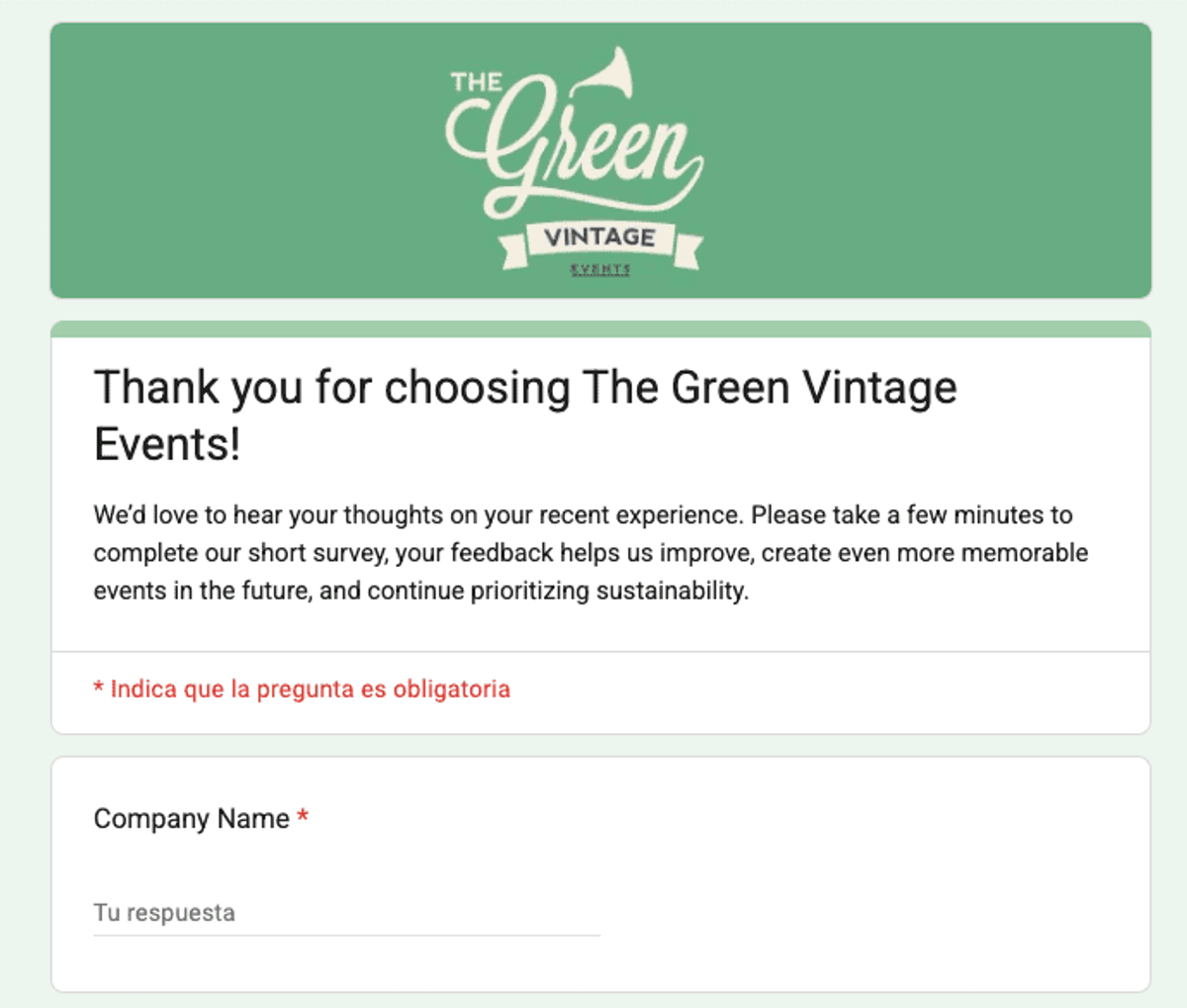
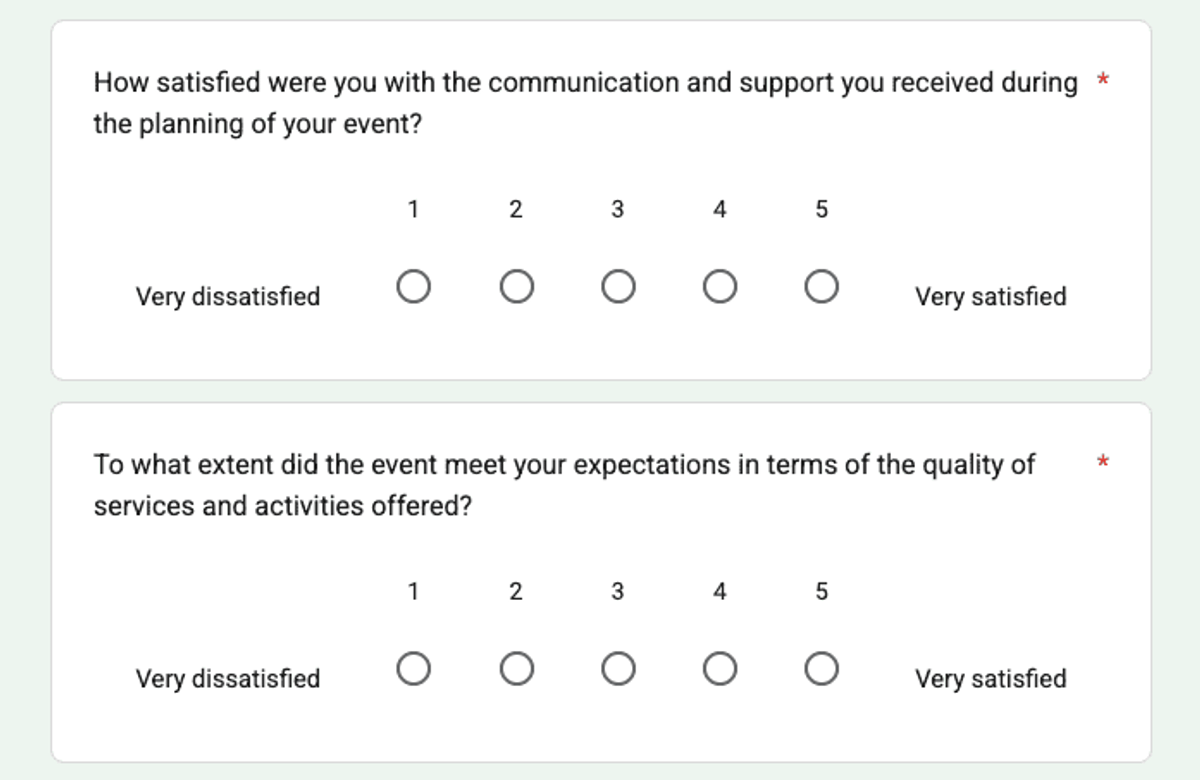
A well-designed survey can provide extremely valuable information. A poorly designed one will only generate automatic answers.
Best practices for post-event surveys
- Send it promptly: Within 24–48 hours after the event, while the experience is still fresh.
- Keep it concise: Aim for 5–7 questions to maximize response rates.
- Use a mix of question types: Combine closed-ended questions (for quantitative insights) with one or two open-ended questions (for qualitative feedback).
- Be transparent: Clearly explain how the feedback will be used and how it will benefit participants or future events.
Examples of effective survey questions
- How would you rate your overall event experience?
- Which part of the event did you find most valuable?
- Do you feel more connected to your team or the company after the event?
- Would you attend a similar experience in the future?
- What improvements would you suggest for future events?
The goal is not only to measure satisfaction, but to identify patterns and opportunities for improvement.
4. Net Promoter Score (NPS): would you recommend it?
The Net Promoter Score (NPS) is one of the most widely used indicators to measure experience and loyalty. The question is simple:
On a scale from 0 to 10, how likely are you to recommend this event to a colleague?
NPS classification
- Promoters: 9–10: highly satisfied and enthusiastic participants
- Passives: 7–8: satisfied but not fully engaged
- Detractors: 0–6: dissatisfied or indifferent
Unlike traditional satisfaction scores, NPS measures emotional impact and memorability.
Events that achieve a strong NPS tend to generate positive medium-term effects on team engagement, internal climate, and overall motivation.
5. Digital engagement: when the event lives on online
In today’s world, many events don’t end when the lights go off. Online activity can extend their reach, amplify the impact, and keep the experience alive.
Key digital engagement indicators for events:
- Social media posts during or after the event
- Hashtag usage and mentions
- Reach and impressions
- Interactions: likes, comments, shares
- Video or reel views post-event
For brand or external corporate events, tracking digital engagement helps measure influence, generate buzz, and extend the event’s lifespan far beyond the physical experience.
6. Measuring the “before and after”: real impact
One of the most effective ways to measure impact is by comparing how participants felt before the event versus after.
Key aspects to evaluate:
- Motivation levels
- Work environment and team dynamics
- Internal communication effectiveness
- Sense of belonging and connection
This doesn’t always require complex tools. Even a short pre- and post-event survey can reveal meaningful changes in engagement, mindset, and team cohesion.
7. Measuring impact is not about control, it’s about better decisions
Measuring the impact of an event is not just about justifying costs. It’s about:
- Understanding what works and what doesn’t
- Optimising future experiences
- Designing events with intention and strategy
- Creating real value for both people and organisations
A well-measured event stops being an “extra” and becomes a strategic business tool, informing decisions and guiding future planning.
Events are no longer judged solely by enjoyment
Today, the success of an event is measured by what it leaves behind. When an event is designed with clear objectives and its impact is properly measured, it:
- Generates tangible results
- Creates lasting value
- Strengthens company culture, brand identity, and team cohesion
That is what truly differentiates a nice event from an effective one.
Recent posts



Related posts